Why Is My Wool or Cashmere Scarf Pilling? Is It Fake?
You’ve just bought a beautiful cashmere scarf. It’s soft, warm, and maybe a little expensive.
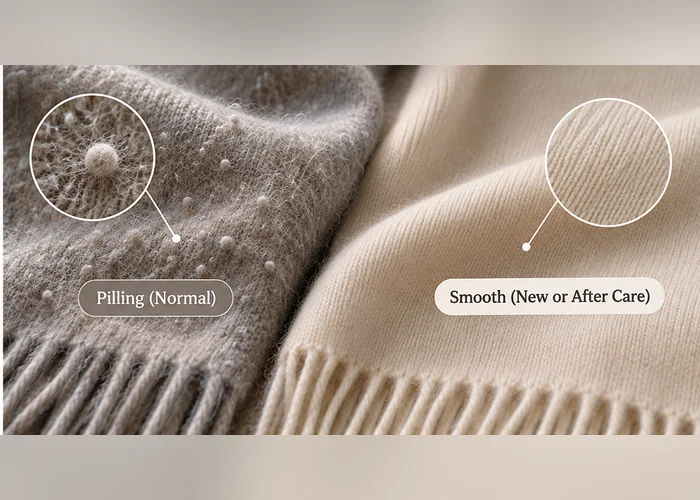
But after wearing it a few times, you notice something disappointing: tiny fuzzy balls are appearing on the surface.
Your first thought might be:
“Wait… I paid for real cashmere. Why is it already pilling? Did I buy a fake?”
Here’s something many people don’t realize:
Even genuine, high-quality wool and cashmere scarves can pill.
Pilling is a common characteristic of many natural-fiber fabrics. It doesn’t automatically mean your scarf is fake, cheap, or poorly made.
But why does it happen? And how much pilling is actually normal?
Let’s take a closer look.
Why Does Cashmere Scarf Pilling Happen?
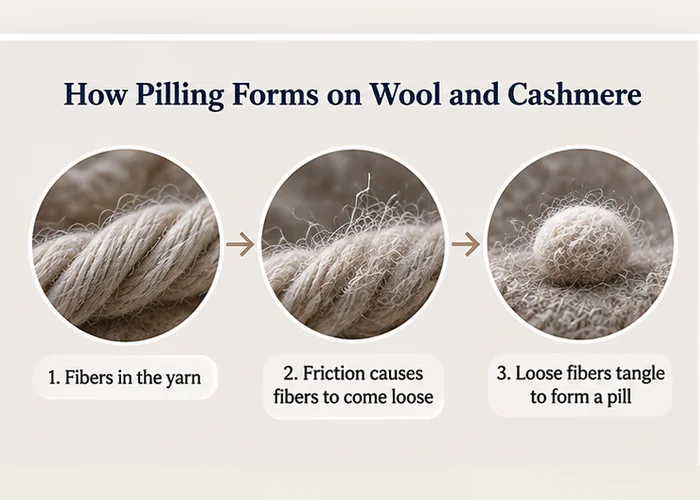
First, let’s understand what those little balls actually are.
Wool and cashmere yarns are made from many individual fibers twisted together.
During everyday wear, friction can cause some fiber ends to work their way out of the yarn and onto the fabric surface.
As these loose fibers rub against each other, they become tangled and form tiny balls known as pills.
That’s pilling.
Think about how you wear a scarf.
It constantly rubs against your coat collar, jacket zipper, handbag strap, and sometimes even itself as you wrap it around your neck.
All that movement creates friction.
And friction is one of the main reasons wool and cashmere develop pills.
According to Woolmark, pilling is influenced by both how a fabric is made and how it is worn.
Does Pilling Mean My Cashmere Scarf Is Fake?
No. Pilling alone cannot tell you whether cashmere is genuine.
This is probably the biggest misconception about cashmere.
Some people believe real cashmere should never pill because it’s expensive.
Unfortunately, that’s not how natural fibers work.
Even a scarf made from genuine 100% cashmere can develop pills, particularly in areas exposed to repeated friction.
And here’s another surprising fact:
Synthetic scarves can pill too.
In fact, some synthetic fibers hold onto pills particularly well because the fibers are strong enough to keep the tangled balls attached to the fabric.
So neither the presence nor the absence of pilling proves whether a scarf is genuine cashmere.
If you’re concerned about authenticity, start by checking the fiber-content label and the seller’s product information.
For a reliable answer, professional fiber-composition testing is more useful than judging by appearance or pilling alone.
Why Do Some Cashmere Scarves Pill More Than Others?
Now we’re getting to the interesting part.
Two scarves may both be labeled 100% cashmere, yet one develops noticeable pilling much faster than the other.
Why?
Because the quality of the finished scarf depends on more than its fiber composition.
1. Fiber Length Matters
Longer fibers can generally be held more securely within the yarn.
Shorter fibers have more ends that may work their way to the surface during wear.
This is one reason fiber length matters when selecting wool and cashmere yarns.
However, longer fibers alone don’t guarantee a pill-free scarf.
2. Yarn Twist Makes a Difference
Yarn isn’t simply a bundle of loose fibers.
Those fibers are spun together with a particular amount of twist.
A softly spun yarn can create the luxurious, fluffy feeling many people love in a winter scarf.
But a yarn with a looser structure may also allow fibers to move more easily.
A firmer yarn can improve resistance to pilling, although too much twist may change the softness and drape of the finished scarf.
It’s a balance.
3. Fabric Construction and Finishing Matter
A smooth, tightly constructed scarf and a fluffy, brushed scarf may behave differently during everyday use.
Brushing raises fibers to create a soft, fuzzy surface.
It looks beautiful and feels comfortable, but those exposed fibers can be more susceptible to surface friction.
This doesn’t mean brushed scarves are bad quality. It means their appearance and maintenance requirements can be different.
4. How You Wear Your Scarf Matters
A scarf worn loosely over a smooth coat may experience less friction than one repeatedly rubbing against rough outerwear.
Areas around the neck, shoulders, and coat collar are particularly exposed.
That’s why you may notice pilling in specific areas rather than across the entire scarf.
How Much Pilling Is Normal?
A few small pills after the first several wears can be perfectly normal.
Some wool and cashmere products may show less pilling over time as loose surface fibers are gradually removed.
But there’s an important difference between ordinary surface pilling and excessive deterioration.
Usually less concerning:
- Small pills concentrated in areas of friction
- Light fuzzing after repeated wear
- Pills that can be gently removed without damaging the fabric
- A scarf that retains its structure and overall appearance
Worth investigating:
- Heavy pilling across the entire scarf after very limited use
- Continuous excessive fuzzing or fiber shedding
- Fabric becoming noticeably thin or losing its structure
- Severe pilling that quickly returns despite careful use
These signs don’t automatically prove the material is fake, but they may suggest that the fiber quality, yarn construction, finishing, or product performance deserves closer examination.
If that happens, contact the seller before repeatedly removing the pills.
How to Remove Pilling From a Wool or Cashmere Scarf
The good news?
You usually don’t need to throw away your favorite scarf just because it has started pilling.
Here’s how to care for it.
Step 1: Lay the Scarf Flat
Place your scarf on a clean, smooth surface.
Avoid stretching or pulling the fabric.
Step 2: Use a Suitable Cashmere Comb
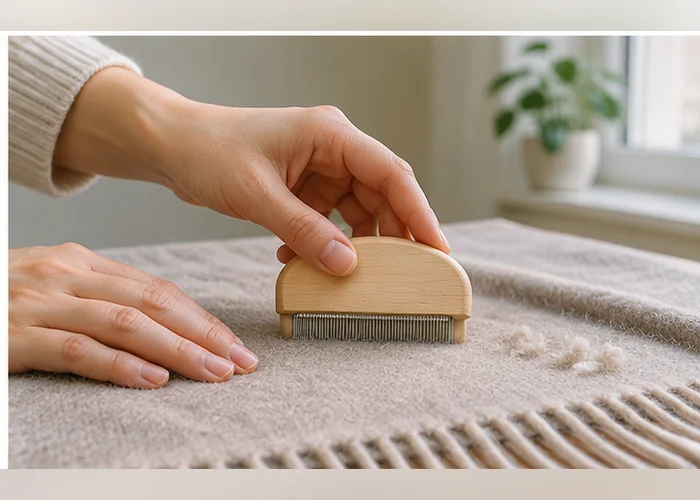
A gentle cashmere comb can help remove loose surface pills.
Work carefully with light, short strokes, following the fabric surface.
For some sturdier fabrics, a fabric shaver may also be suitable, but extra caution is needed with delicate cashmere, open knits, and loosely woven scarves.
Always test an inconspicuous area first.
Step 3: Never Pull the Pills Off Forcefully
It can be tempting to pick at those little balls with your fingers.
But pulling them can draw more fibers out of the yarn or damage the fabric.
Gentle removal is much safer.
Step 4: Follow the Care Label
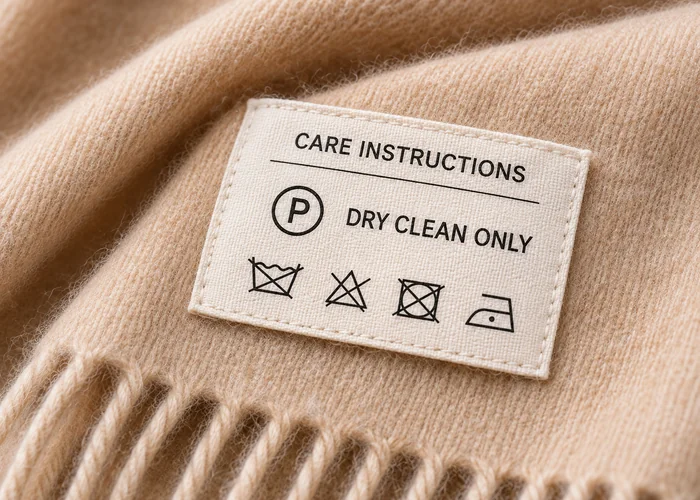
Wool and cashmere require appropriate care.
Avoid aggressive rubbing and harsh washing methods.
Follow the manufacturer’s instructions for washing and drying, and reshape the scarf carefully when needed.
You can reduce pilling, but it’s unrealistic to guarantee that a wool or cashmere scarf will never pill.
What Can Clothing Brands Learn From Scarf Pilling?
For fashion brands developing their own wool or cashmere scarf collections, pilling is an important quality consideration.
A scarf may look beautiful when first produced, but how will it perform after repeated wear?
That’s why material selection should go beyond checking whether a yarn is labeled 100% wool or 100% cashmere.
At Evelyn Fashion, we believe brands should consider several factors during product development:
- Fiber selection: Choosing suitable fiber quality and yarn specifications
- Yarn construction: Balancing softness, loft, strength, and pilling resistance
- Knitting or weaving: Selecting a construction appropriate for the finished design
- Fabric finishing: Understanding how brushing and other treatments affect appearance and wear
- Sample evaluation: Reviewing the actual product before bulk production, including pilling performance where required
A softer scarf isn’t always a more durable scarf, and a premium fiber label doesn’t guarantee identical performance across different products.
The goal is to find the right balance between comfort, appearance, durability, and cost.
Brands exploring different material options can also read our Wool vs. Cashmere Guide.
Frequently Asked Questions
Does real cashmere pill?
Yes. Genuine cashmere can pill because friction causes loose surface fibers to become tangled. Pilling alone does not indicate whether cashmere is authentic.
Does expensive cashmere pill less?
Not necessarily. Fiber length, yarn construction, finishing, and the way a scarf is worn all influence pilling. Price alone cannot guarantee performance.
Will cashmere stop pilling eventually?
Some scarves may pill less after loose surface fibers are removed. However, friction can continue to cause pilling throughout the product’s life.
Can I completely prevent wool scarf pilling?
Not completely. You can minimize pilling with careful handling, appropriate washing, reduced friction, and gentle maintenance.
Final Thoughts: Pilling Doesn’t Mean Your Scarf Is Fake
If your wool or cashmere scarf has started developing little fuzzy balls, don’t immediately assume you’ve been sold a fake.
Pilling is a common textile phenomenon, even in genuine natural-fiber products.
What matters is understanding why it happens, whether the amount is reasonable, and how to care for the scarf properly.
A well-made scarf should balance softness, appearance, and durability — but no natural-fiber scarf can be guaranteed completely free from pilling.
And for fashion brands, understanding that balance is an important part of creating products customers will enjoy wearing season after season.
Developing your own wool or cashmere scarf collection?
Explore Evelyn Fashion’s custom knitted scarves and woven scarf manufacturing services to discuss materials, construction, sampling, and quality requirements.